

F Chassis N55 Owners: Tested Turbo Inlet Upgrades Boost Reliability
Upgrade the N55 turbo inlet if your car runs elevated boost, a hybrid turbo or any tune beyond the low stages. Aluminum inlets suit higher-boost or hybrid builds where rigidity matters most; a heavy-duty silicone or hybrid design with billet fittings works well for street-driven cars that still want reliability. Either way, confirm fitment against your chassis code first, then order the part and matching clamps before you touch a wrench.
TL;DR:
- Aluminum inlets are recommended for hybrid or higher-boost builds due to their rigidity and heat resistance, while silicone inlets suit street cars with moderate tunes for easier fitment.
- Cracks in the factory plastic inlet cause boost fluctuations, misfires, and false check engine lights, which resolving early prevents prolonged troubleshooting.
- Proper installation, including even clamp tightening and leak testing, is crucial to prevent boost leaks that can occur from mismatched couplers or improper sealing.
- Confirm fitment to your specific chassis and engine code before purchasing, as generic listings often lead to returns or incompatible parts.
- Upgrading the inlet is most beneficial when paired with a charge pipe and tune, especially for hybrid turbo setups, to maximize airflow gains and reliability.
Table of Contents
- What is the N55 turbo inlet and why does the factory part fail?
- What performance and reliability gains come from an aftermarket inlet?
- Aluminum, silicone, or hybrid: which inlet material fits your build?
- How do you install an N55 turbo inlet without creating a leak?
- How do you pick the right turbo inlet for your N55?
- Does a new turbo inlet affect your warranty or emissions compliance?
- What does an N55 turbo inlet cost, and is it worth the money?
- What installation problems come up most with N55 turbo inlets?
- What has been learned from testing N55 inlets?
- What parts should you check out for your N55 intake system?
- Where can you verify these claims yourself?
- Sources
- FAQ
What is the N55 turbo inlet and why does the factory part fail?
The turbo inlet is the pipe that feeds ambient air from the airbox into the turbo compressor housing. It sits under real vacuum and heat cycling every time the engine spools, and BMW built the factory piece from a molded plastic that was never meant for a long service life under repeated stress.
That plastic hardens with age and heat, then cracks along its ribbed sections once boost pressure climbs. A cracked inlet pulls in unmetered air past the mass airflow sensor, which throws off the fuel trims and drivability that hybrid turbo builds depend on. Forum install threads document owners chasing intermittent codes for months before finding a hairline crack near the coupler.
Watch for these symptoms:
- Boost pressure that fluctuates or undershoots target under hard acceleration
- Random misfires that don’t correlate with a specific cylinder or RPM range
- Fuel trims drifting positive at idle or cruise
- A check engine light that clears and returns without an obvious cause
Catching a cracked inlet early spares you weeks of guessing at vacuum leaks, injector faults, or sensor failures that all mimic the same symptoms.
What performance and reliability gains come from an aftermarket inlet?
An aftermarket inlet with a larger internal diameter and a smoother bend radius moves more air with less turbulence than the factory part, which shortens spool time and helps the turbo build boost sooner off idle. On stock-turbo cars running a modest tune, the gain is more about consistency than raw numbers. On hybrid turbo builds, the improved flow at the compressor inlet becomes part of realizing the turbo’s actual output rather than choking it at the front end.
Reliability is the bigger win for most owners. Aluminum and reinforced silicone inlets don’t crack the way the OEM plastic does, so you eliminate a recurring failure point rather than just delaying it.
- An inlet upgrade is optional if you’re chasing a small tune bump on a stock turbo with no other issues.
- It becomes close to mandatory once you’re running a hybrid turbo or sustained higher boost, since experienced tuners treat the inlet as a required line item on those builds
- Pair it with a charge pipe, a matched intercooler, and a proper tune for the gains to actually show up on a dyno sheet
Pro Tip: An inlet swap alone rarely moves the needle much on a stock-turbo car. Budget for the charge pipe and tune at the same time so you’re not paying for labor twice.
Aluminum, silicone, or hybrid: which inlet material fits your build?
Material choice comes down to how your car is driven and how much boost it sees. Aluminum inlets are rigid, resist heat soak, and hold their shape under sustained high boost, which is why they show up so often on hybrid turbo cars. Silicone inlets flex slightly during installation and thermal cycling, which makes them more forgiving to fit and quieter under load. Hybrid designs combine a rigid aluminum or composite body with silicone couplers and billet fittings, aiming for the durability of metal without the fitment fuss of an all-rigid pipe.
Fitment coverage across the F-chassis N55 lineup typically includes the F20/F21 hatchback, the F22/F23/F87 coupe and M2, the F30/F31 sedan and wagon, and the F32/F33/F36 four-door coupe body styles. High-flow silicone inlet listings commonly spell out exactly which of these chassis codes they fit, which is the fastest way to confirm compatibility before you buy.
- Aluminum: best rigidity and heat resistance, ideal for hybrid turbo setups
- Silicone: flexible fitment, quieter, suited to street cars with moderate tunes
- Hybrid: billet fittings and larger bore paired with a flexible coupler section.
Pro Tip: If a product page doesn’t list your exact chassis and engine code, don’t assume it fits. Vendor fitment lists are the first filter, and skipping that check is how owners end up returning parts.
How do you install an N55 turbo inlet without creating a leak?
Installation is straightforward mechanically, but the details determine whether you end up with a clean seal or a boost leak six months later.
- Remove the airbox and factory inlet, then inspect the turbo compressor housing flange for old gasket material or damage.
- Compare the new inlet against your factory part for bore size, bolt pattern, and coupler length before test fitting.
- Seat the new gasket or O ring fully, then hand tighten the inlet to the turbo flange before torquing to the manufacturer’s spec.
- Install worm gear or T bolt clamps at each coupler joint and torque them evenly, not just snug.
- Reconnect the MAF sensor and any vacuum lines, then double check clearance against the airbox and surrounding hoses.
Test the seal before you drive it hard. A handheld boost leak tester pressurizes the intake tract so you can listen and feel for escaping air at each joint. A soapy water smoke test works nearly as well if you don’t have a leak tester on hand, and a quick dyno pull afterward confirms boost holds steady where it should.
The most common mistakes are reusing worn clamps, skipping the O ring at the compressor flange, and mismatching a coupler that’s slightly undersized for the new pipe’s bore. Recheck clamp torque after the first few heat cycles, since silicone couplers can settle slightly as they seat.
Pro Tip: Keep the factory clamps as spares even after upgrading. They’re a quick backup if an aftermarket clamp ever loosens on the road.
How do you pick the right turbo inlet for your N55?
Start with fitment, not features. Confirm your exact chassis code and engine variant against the product’s listed compatibility before comparing anything else, since a mismatched bore or flange will cost you more in return shipping than you’d save on a discount part.
Next, match the inlet to your turbo setup. A stock turbo running a light tune can usually get by with a well-built silicone inlet. A hybrid turbo, or any setup pushing meaningfully past stock boost, calls for an aluminum or reinforced hybrid inlet built to handle sustained pressure without flexing or cracking.
Check compatibility with what’s already on the car. The new inlet needs to mate cleanly with your existing charge pipe, MAF sensor housing, and airbox without forcing an adapter you didn’t budget for. If you’re running an aftermarket airbox, verify the inlet’s coupler diameter matches rather than assuming universal fit.
Here’s what separates a trustworthy vendor from a risky one:
- A clear, chassis-specific fitment guarantee rather than a vague “fits N55 models” listing
- Clamps, gaskets, and mounting hardware included, not sold separately as an afterthought
- A stated warranty and a workable return policy if fitment doesn’t match your car
- Realistic claims about boost capacity rather than unsubstantiated horsepower promises
Red flags work the other way. Be cautious of listings with no chassis breakdown, photos that don’t match the description, or hardware conspicuously missing from the box contents. If a seller can’t tell you whether their inlet fits an F30 versus an F22 without checking, that’s a sign the fitment data hasn’t been verified in the first place.
Manufacturers building complete hybrid turbo kits, such as Vargas Turbocharger Technologies with its GC and GC+ upgrades, routinely spec a matched inlet alongside the turbo itself. That’s a useful signal: when a turbo builder insists on pairing a specific inlet with their hardware, it’s because the stock piece genuinely can’t keep up.
Does a new turbo inlet affect your warranty or emissions compliance?
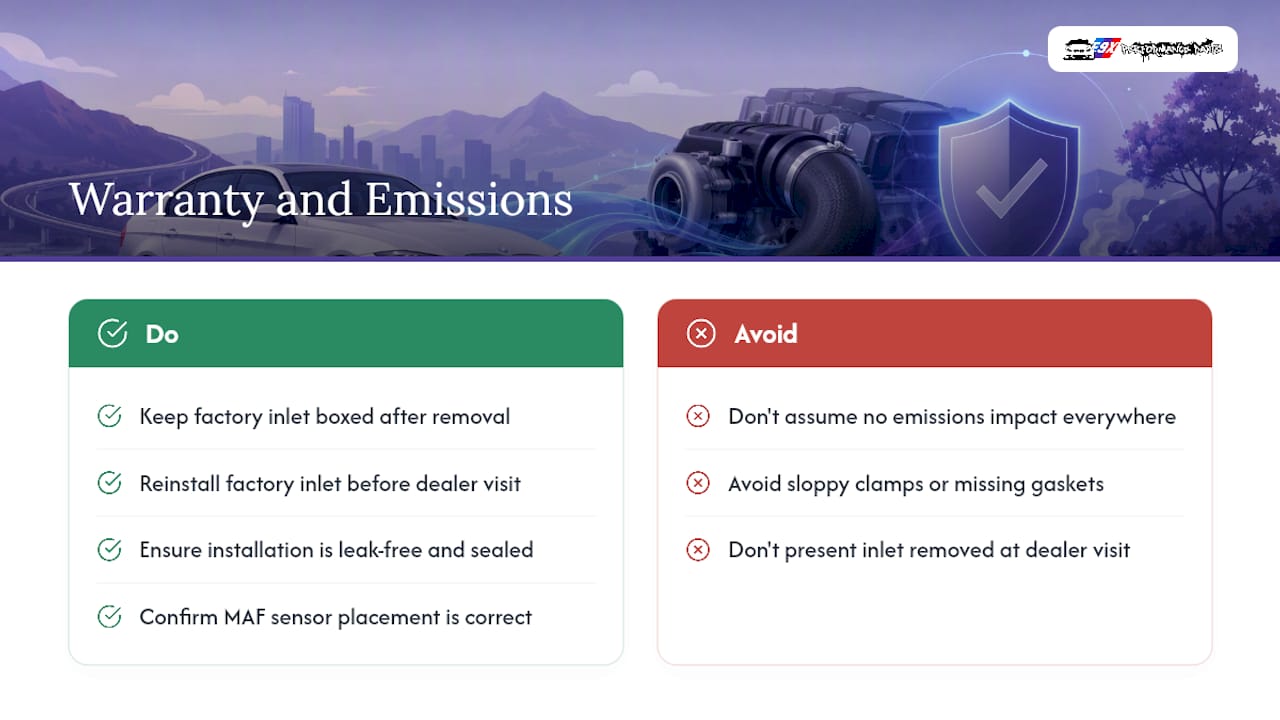
Replacing the turbo inlet is a bolt-on modification to the intake tract, not an emissions control device by itself, so it doesn’t touch catalytic converters, oxygen sensors, or evaporative systems directly. That said, any modification made under a manufacturer or dealer warranty carries some risk if a dealer decides to attribute an unrelated failure to the change. In practice, an inlet swap is one of the less contentious modifications compared to ECU tuning or turbo replacement, since it’s a passive airflow component rather than something that alters fueling or timing on its own.
Emissions testing rules vary by region, and some jurisdictions inspect visually for intact factory components in the intake and exhaust path. A well-made aftermarket inlet that maintains proper MAF sensor placement and doesn’t introduce unmetered air shouldn’t affect emissions readings, since it’s not altering combustion chemistry. Where it can cause a failure is if installation is sloppy and creates a vacuum leak, which throws off fuel trims and can trigger a check engine light during inspection.
If your car is still under a manufacturer warranty, keep the factory inlet in a box after removal. Reinstalling it before any dealer visit avoids the conversation entirely. For cars already out of factory warranty, the practical consideration shifts from warranty risk to simply making sure the installation is leak free, since a botched clamp or missing gasket is far more likely to cause a problem than the part itself.
None of this is a substitute for checking your specific region’s inspection requirements, since rules on aftermarket intake components differ enough between jurisdictions that a blanket answer doesn’t hold everywhere.
What does an N55 turbo inlet cost, and is it worth the money?
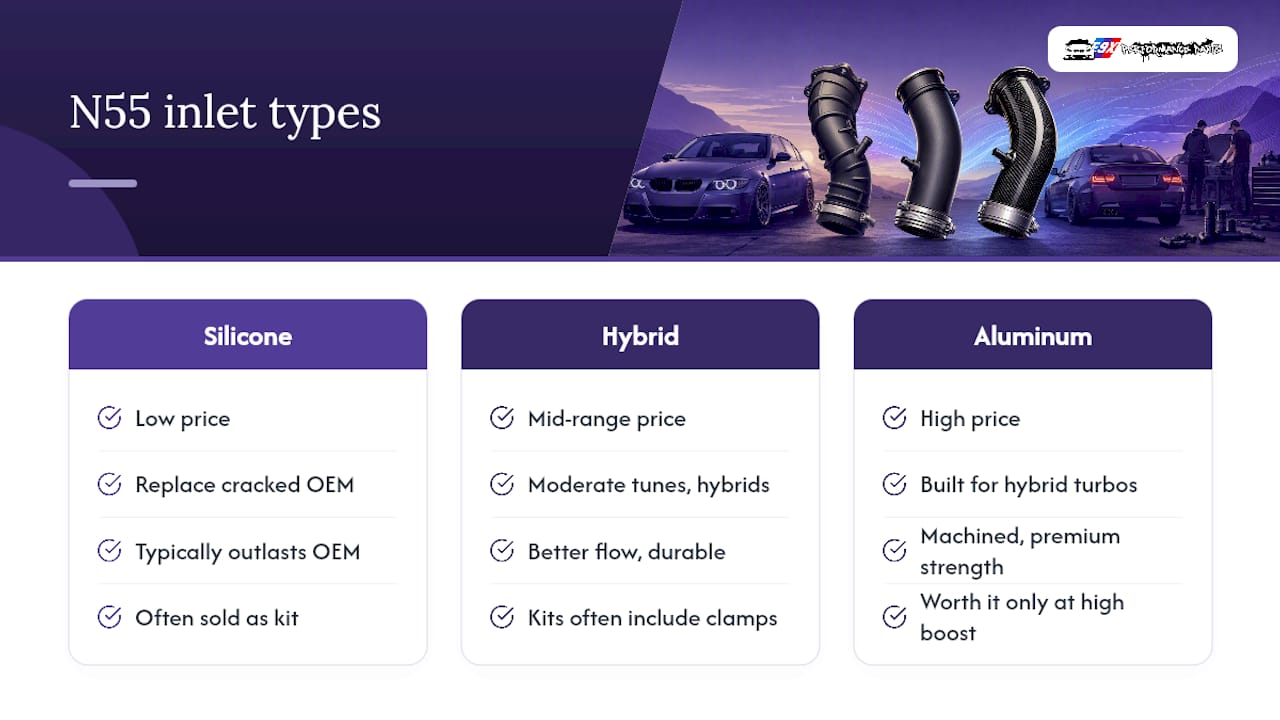
Aftermarket N55 inlets span a wide price range depending on material and construction quality. Basic silicone replacement inlets sit at the lower end of the market, while reinforced hybrid designs with billet aluminum fittings and larger bore diameters command a premium. Full aluminum inlet pipes built for hybrid turbo applications tend to land at the higher end, reflecting the machining and material cost involved.
Value comes down to what problem you’re solving. If you’re replacing a cracked factory inlet purely for reliability, even a mid-range silicone or hybrid unit resolves the issue and typically outlasts the OEM part by a wide margin. If you’re building toward a hybrid turbo, the inlet cost is a small fraction of the overall project and not a place to cut corners, since a flow-restricted or failure-prone inlet undermines the turbo you just paid to upgrade.
Compare inlets on what’s included, not just sticker price. A kit that bundles clamps, gaskets, and a documented fitment guarantee often costs a little more upfront but avoids a second order for hardware you didn’t realize was missing. Cheaper listings that ship bare tubing without couplers or clamps can end up costing more once you’ve sourced the missing pieces separately.
For most owners running a moderate tune, a quality hybrid or silicone inlet in the mid-range price bracket delivers the reliability benefit without paying for capacity you won’t use. Save the top-tier aluminum builds for cars actually running the boost levels that justify them.
What installation problems come up most with N55 turbo inlets?
The most frequent complaint after an inlet swap is a boost leak that wasn’t there with the factory part, and it almost always traces back to a clamp that wasn’t torqued evenly or a coupler that’s a slightly different diameter than expected. Aftermarket couplers can vary in wall thickness between brands, so a clamp sized for the factory pipe sometimes doesn’t seat correctly on a new hybrid design.
Clearance is the second common headache. Some aluminum inlets have a slightly different bend radius than the factory piece, which can crowd nearby vacuum lines or the AIS pressure sensor. Test fit before final tightening rather than assuming a direct swap, and double check that nothing rests against the pipe once the airbox goes back on.
A MAF sensor reading that goes erratic after installation usually points to an unmetered air leak downstream of the sensor rather than a bad sensor itself. Before replacing anything, recheck every clamp on the new inlet and confirm the O ring at the compressor flange seated properly during install.
Some owners report a boost hang or minor turbo lag increase right after installation, which almost always resolves once the ECU relearns adaptation values over a handful of drive cycles. If it persists past that, it’s worth verifying that the inlet’s inner diameter actually matches what the seller advertised, since a mislabeled or damaged part occasionally slips through.
What has been learned from testing N55 inlets?
Inlet recommendations should focus on fitment first because that’s where most returns and complaints originate, not from the parts themselves. Every listing should be checked against the specific F-chassis and engine code combinations it claims to fit, rather than trusting a generic “N55 compatible” label from a manufacturer spec sheet.
Technical guides for the E9x and N55 platforms emphasize the same principle: verify before you buy, and don’t assume a part built for one chassis variant bolts to another without modification. If you’re unsure whether a listed inlet matches your exact car, it is best to confirm fitment details before placing an order rather than after a part arrives that doesn’t fit.
What parts should you check out for your N55 intake system?
If you’re building out the intake side of your N55 alongside a turbo inlet upgrade, a few catalog items solve common gaps in the setup. The KN 57S2003 57S Performance Airbox suits E90/E91/E93 335i owners looking for a complete airbox solution that pairs cleanly with an upgraded inlet, since a restrictive stock airbox undercuts the flow gains you just paid for.
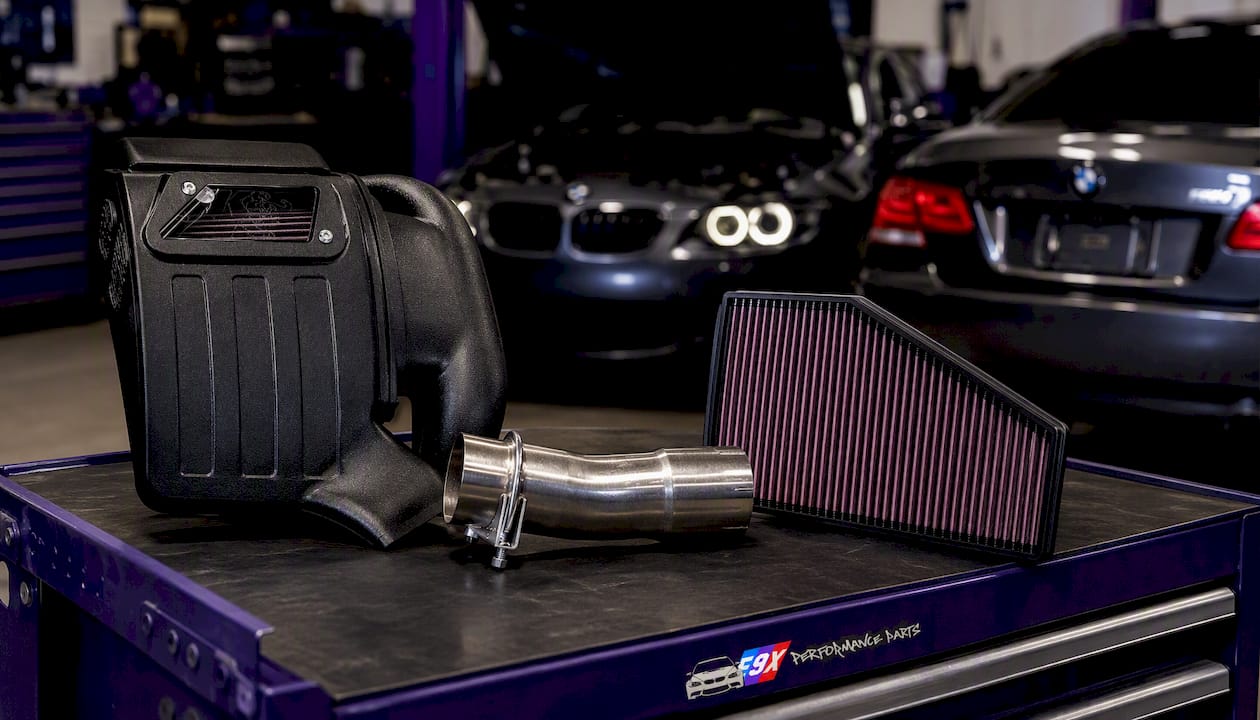
For E60 and E61 chassis owners running diesel variants, the 039-960R adapter fills a specific fitment gap that generic inlet kits don’t address, since diesel intake geometry differs enough from the petrol N55 lineup to need its own hardware. And if you’re maintaining an E60 535D alongside performance work elsewhere in the car, the KN 332943 replacement filter keeps routine filtration on schedule without a trip to the dealer parts counter.
Before ordering any of these, confirm your chassis code and engine variant against the product page, then add the clamps or gaskets a given install calls for so you’re not waiting on a second shipment mid job. If your fitment question isn’t answered on the page itself, reach out to our team directly. We’d rather confirm compatibility before you check out than field a return request after the part shows up.
Where can you verify these claims yourself?
- Best Turbo Upgrade for BMW N55: confirms inlet cracking failure modes and hybrid turbo pairing advice
- N55 Turbo Upgrade guide: covers airflow gains from silicone piping upgrades
- F30 Bimmerpost inlet install thread: real owner photos and reported symptoms
- MAD N55 Inlet product page: example of direct-fit F-chassis specs
Sources
- Best Turbo Upgrade for BMW N55 - Stage 1 to Single Turbo
- N55 Turbo Upgrade: Boost Your BMW’s Performance
- BMS high flow silicone turbo inlet for N55 BMW F2X F3X 235 335 435 M2
FAQ
Do I need to upgrade the N55 turbo inlet on a stock turbo car?
Not always. It’s optional on a mild tune with a healthy factory inlet, but becomes a priority once you notice cracking symptoms or plan to push boost higher.
Is an aluminum or silicone inlet better for the N55?
Aluminum holds up best under sustained high boost and hybrid turbo setups, while silicone or hybrid designs offer easier fitment and work well for moderately tuned street cars.
Will a new turbo inlet void my BMW’s warranty?
It can create friction with a dealer if installation causes an unrelated issue, so keeping the factory inlet to reinstall before any warranty visit is a safer approach.
What tools do I need to check for a leak after installing a new inlet?
A handheld boost leak tester is ideal, but a soapy water smoke test at each clamp joint catches most leaks without special equipment.
Does a turbo inlet upgrade alone add horsepower?
Rarely by itself on a stock turbo car. Gains show up more clearly when the inlet is paired with a charge pipe and tune, or when it’s feeding a hybrid turbo that needs the extra flow.